
Brand guidelines are normally not very high on the priority lists for small businesses. But, as your business grows and you employ more people, your brand can easily start to go off track and be interpreted in different ways.
Having strong brand guidelines can help align all areas of your business. From small things that most employees do, such as email writing to more client-facing content created by internal or external marketing teams, keeping your brand consistent is incredibly important.
You want your business to come across as well established with a clear message, so your client base can recognise you without any issues. Consistency is key when it comes to marketing. You don’t want a potential client clicking on a social post or advert and being sent to a website which looks completely different. As people become wary of scams and fake websites, you don’t want to have any red flags which could turn people away.
Here is a quick guide on what you should include in your brand guidelines to make them as effective as possible.
Logo
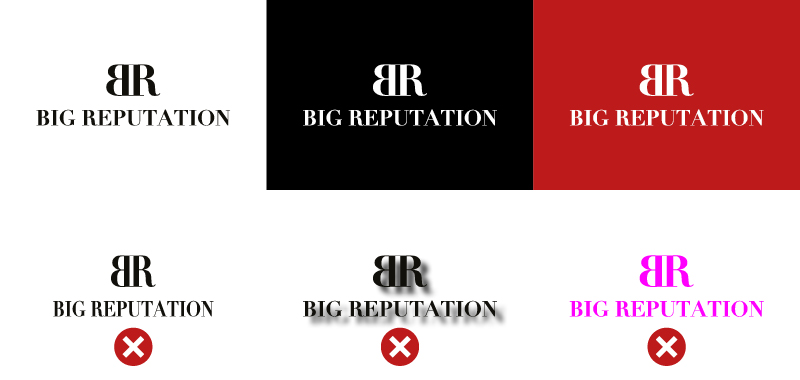
Your logo is one of the most important assets to you and your business. In your brand guidelines, you should show any variations of your logo and when it should be used.
You should include:
- Primary Logo: Your main logo.
- Secondary Logo: An optional alternative version of your logo which is simpler for small sizes.
- Colour variations: These should include white and black versions and any other options you need.
- Stacked or Linear Versions: Is your logo long? If so, it might be worth having an alternative stacked version for when the space is limited.
- What not to do: for example, don’t stretch the logo, change the colour etc.
- What is the smallest size your logo should be used at. Is it still readable if it’s small? If not, you may need to change it.
- How much clear space should be around the logo.
You should have all these variations saved as JPEGs, PNGs (without a background) and ideally an EPS (a vector version), all in a folder for easy reference in all the formats you need. The person who created your logo should have access to all of these, but you can always contact us for help!
Mission and Values
Not everything in your brand guidelines needs to be about colours and typefaces. To keep your consistency, adding your mission and values is really important as it lets all your new and future employees know what you stand for. Everyone is working towards the same goal, so by stating what your mission is and what your business values are helps keep everyone on the same page.
Tone of Voice
You may not have thought about it much, but your brand has a personality. Are you a fun brand who likes a good pun? Or do you want to be perceived as a serious brand? How you communicate with your clients gives them the impression of what you and your employees are like.
If you have multiple people working on communications at the same time, having a specific tone of voice will help keep everything in line.
Colour Palette
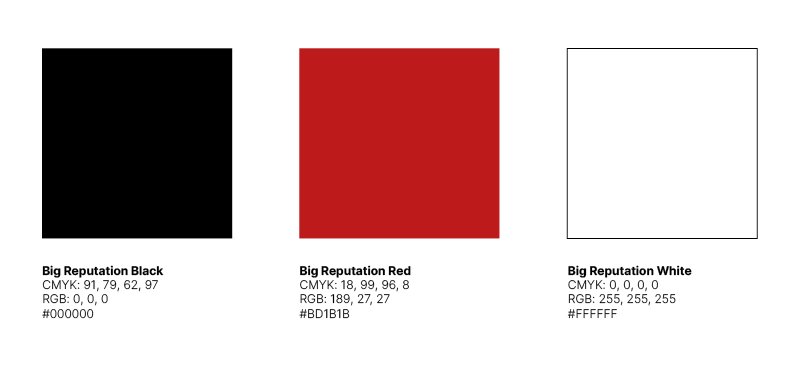
Creating a colour palette for your brand gives you more variety in what colours you can use in your marketing. If your logo only has one or two colours, you may want to pick another couple of contrasting colours to help mix it up. For example, on your website, if you have call to action buttons, putting them in a contrasting colour makes them stand out more, and increases the chances of being clicked.
When listing your colours, make sure you include:
- Any pantone references you have.
- CMYK references (for print).
- RGB references (for web).
- Hex codes (simplified codes for web).
- You can also include tints, if you use lighter colours for backgrounds etc.
Typography
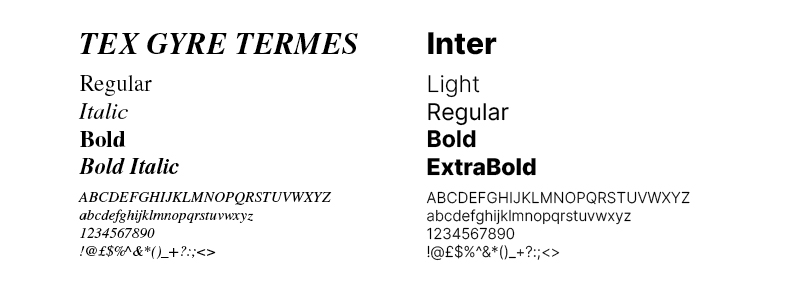
The typefaces you use in your branding can be as simple or wacky as you like! Again, this can be linked to your personality, so make sure the typeface aligns with your business. One thing to keep in mind is the licensing of typefaces. Don’t use any ‘personal use only’ typefaces in your branding unless you purchase the proper license.
In your guidelines, make sure you cover:
- Main typefaces and what weights you use.
- Any secondary typefaces.
- What you use for titles and paragraphs.
- What size text should be.
- What colour text should be on what backgrounds. Remember accessibility is crucial to make sure everything is legible, so make sure the colours contrast well.
Imagery
In many businesses, imagery can be important to help get your message across. You may use photography or illustrations across your brand, so it’s always worth making it clear what style you’d like to use. Some stock photography can be very obvious, so you may choose to only use your own photos, or find stock photos which look a little less staged.
Here’s what to cover in your imagery:
- If you prefer to use your own photos or stock imagery.
- If you already have some images you use and like, you can include these as an example of the imagery you want to use across the brand.
- If you have sectors or services and you want to make sure your imagery always matches your sector, be specific in your brand guidelines.
- What style of illustrations you use. You may have a collection available already, so be specific if it’s important to your brand.
- Do you have icons? If so, try and keep them consistent. For example, either use filled or outline icons throughout, don’t mix and match. You may prefer solid colour, or full colour.
- If you have product photography and watch everything to match, make sure you are very detailed in how you want them to look.

Anything specific to your business
If you use anything in your business that you have specific instructions about, add them into your brand guidelines. For example, do you write your business name in a specific way? You may want to include this so you don’t have different versions in your marketing.
Final thoughts
Your brand guidelines can be very personal to your brand and you can include as much as you’d like. You may change a few things as you go or realise you’ve missed something, so you can always go back and add to them when necessary. Your brand may also evolve over time, so make sure you update them as you go.
Need help creating new brand guidelines or if you’d like to discuss your brand?
Big Reputation can help you look at your brand as a whole, see what we can do to develop it further and create a set of brand guidelines to use across your business.